Financing industrial decarbonisation in India: Making climate technologies bankable

India stands at a defining moment in its industrial transition. As the country pursues its ambition of becoming a global manufacturing powerhouse while advancing towards its net-zero commitments, industrial decarbonisation has become both an economic imperative and a strategic opportunity.

Continue ReadingFinancing industrial decarbonisation in India: Making climate technologies bankable

Financing the food–climate–health nexus in Small Island Developing States

Small Island Developing States (SIDS) stand at the frontline of the climate crisis. Rising sea levels, increasingly frequent tropical storms, ocean warming and changing rainfall patterns are reshaping livelihoods, disrupting food production and placing growing pressure on public health systems. These impacts are not isolated. Climate change simultaneously affects agricultural productivity, fisheries, nutrition, water security and disease burdens, creating an interconnected food–climate–health nexus that has become central to the resilience of island economies.

Continue ReadingFinancing the food–climate–health nexus in Small Island Developing States

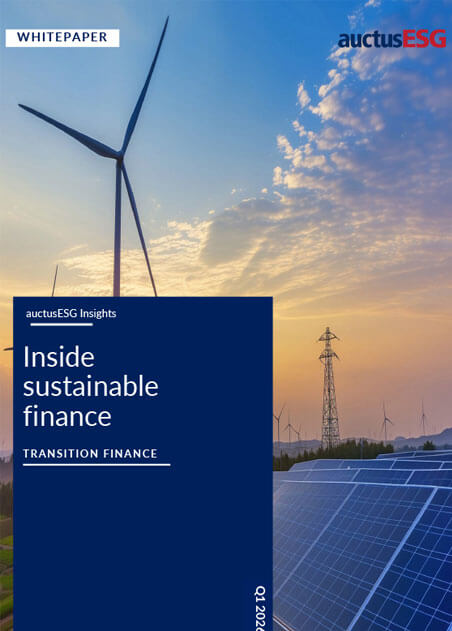
Inside sustainable finance: Transition Finance

This edition of the sustainable finance product series explores the evolving landscape of transition finance and its growing role in accelerating the decarbonisation of hard-to-abate sectors. It presents an overview of global sustainable finance trends in Q1 2026, examines the latest policy and regulatory developments, highlights key transition finance instruments, and features global case studies demonstrating how innovative financing structures are enabling industrial transformation. The publication also explores the emergence of transition-labelled financial products, evolving disclosure standards, and sovereign and corporate financing models that are shaping the next phase of sustainable finance. Together, these insights provide a comprehensive perspective on how transition finance is maturing into a critical enabler of the global net-zero transition.

Continue ReadingInside sustainable finance: Transition Finance

Financing the Commercial Scale up of Industrial Decarbonisation Technologies in India

The roundtable seeks to explore how India can accelerate the deployment of critical industrial decarbonisation technologies, particularly those in the TRL 5–9 range (CCUS, GH2 DRI EAF, Waste heat recovery and Industrial electrification) by addressing financing gap and identifying practical solutions to mitigate barriers.

Continue ReadingFinancing the Commercial Scale up of Industrial Decarbonisation Technologies in India

Structuring Investable Pipelines for the Blue Economy

Continuing the Mumbai Climate Week dialogue, this session will focus on translating coastal climate risks into bankable blue finance pipelines through a sovereign lens, with emphasis on national level policy, fiscal frameworks, and public finance strategies. It will explore how governments can enable subnational action through regulatory alignment, sovereign backed instruments, and support for city level project preparation and access to capital. The discussion will highlight the role of blended finance, sovereign guarantees, and public financial institutions in crowding in private capital and unlocking scalable coastal resilience solutions.

Continue ReadingStructuring Investable Pipelines for the Blue Economy

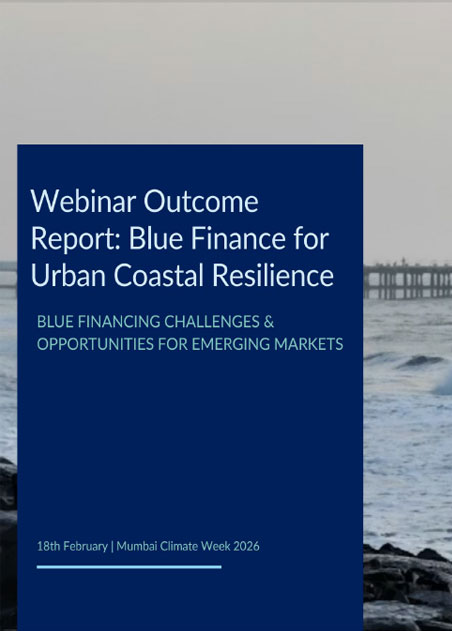
Webinar Outcome Report: Blue Finance for Urban Coastal Resilience – Blue Financing Challenges & Opportunities for Emerging Markets

The report draws on insights from a multi-stakeholder dialogue convened during Mumbai Climate Week 2026 to examine the opportunities and structural challenges shaping blue finance for urban coastal resilience in emerging markets. It highlights the scale of financing needs alongside key barriers such as risk mispricing, tenor mismatches, fragmented governance, and limited bankable project pipelines, while outlining critical market preconditions including regulatory clarity, standardised frameworks, and stronger project aggregation. The report also explores the role of blended finance, credit enhancement, and risk transfer mechanisms in addressing risk-return gaps and presents emerging structuring solutions to help transition blue finance into a scalable asset class that can support climate-resilient development and financial stability.

Continue ReadingWebinar Outcome Report: Blue Finance for Urban Coastal Resilience – Blue Financing Challenges & Opportunities for Emerging Markets

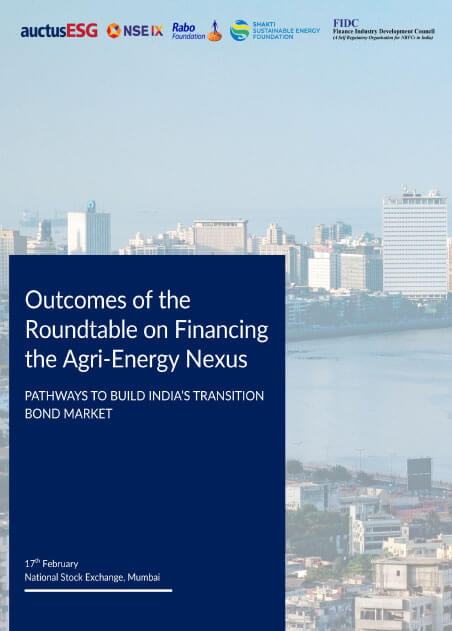
Outcomes of the Roundtable on Financing the Agri-Energy Nexus

This report draws on insights from a high-level roundtable convened during Mumbai Climate Week 2026 to examine pathways for financing India’s agri–energy transition. It captures stakeholder perspectives across financial institutions, policymakers, and market enablers to identify key barriers and opportunities in mobilising capital toward the agri-energy nexus. The report highlights structural challenges such as limited capital market readiness among mid-sized NBFCs, regulatory and disclosure gaps, and high transaction costs, while also outlining emerging opportunities within platforms like GIFT City and NSE International Exchange. It further provides a strategic roadmap to bridge the “missing middle” in climate finance by strengthening institutional readiness, enabling access to transition bond markets, and unlocking scalable, market-based solutions to support India’s climate and development goals.

Continue ReadingOutcomes of the Roundtable on Financing the Agri-Energy Nexus

Building a sustainability reporting ecosystem: How IFRS S1 and S2 are reshaping emerging market finance

The article examines how IFRS S1 and S2 are transforming sustainability reporting from a voluntary transparency exercise into a central pillar of global financial architecture. It analyses regulatory convergence, emerging market transitions, and alignment with nature-related frameworks such as TNFD.

Continue ReadingBuilding a sustainability reporting ecosystem: How IFRS S1 and S2 are reshaping emerging market finance