
REPORTS
Identifying, managing and disclosing climate-related financial risks: Options for the Reserve Bank of India
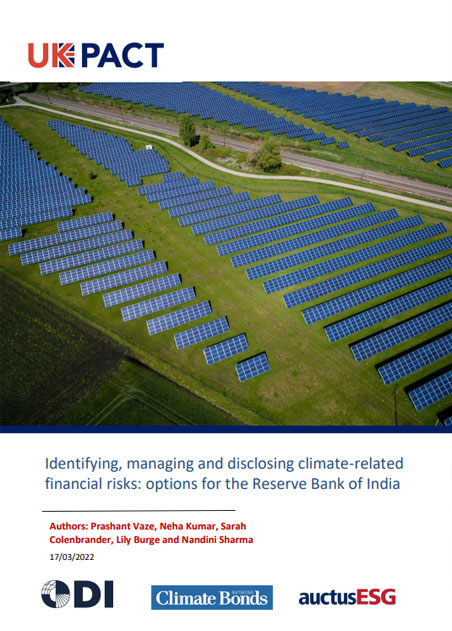
India is already facing the devastating impacts of climate change such as rising temperatures, extreme weather, and economic losses, making climate considerations essential to its development. In response, India has committed to achieving net-zero emissions by 2070 and reducing carbon intensity by 45% by 2030. These targets necessitate major shifts, particularly in the power sector, which in turn create significant transition risks for India’s financial system. To manage this, the Reserve Bank of India (RBI) joined the Network for Greening the Financial System (NGFS) in 2021 to align with global climate risk management practices and advance green finance.
This report presents an independent analysis to support the RBI in addressing climate-related financial risks. It finds that high-emission sectors like electricity, energy-intensive manufacturing, and mining account for a disproportionate share of bank and bond market exposure. For example, only 17% of lending to electricity production supports renewable energy, while bond markets are heavily concentrated in power and oil sectors. These exposures make the Indian financial system vulnerable to transition risks. The report also traces RBI’s journey in sustainable finance, noting its recent efforts through the formation of a Sustainable Finance Group and collaboration with the Ministry of Finance to define a national framework.
Finally, the report surveys how central banks worldwide are adapting monetary, prudential, and credit policies to reduce climate-related risks. It offers a taxonomy of tools and evaluates their applicability to India’s financial landscape, emphasising that any intervention must also support broader development goals. Based on these insights, six tailored recommendations are made for the RBI, prioritising prudential regulation and credit guidance over monetary policy changes, to help climate-proof the financial system while advancing inclusive, sustainable growth.
This report presents an independent analysis to support the RBI in addressing climate-related financial risks. It finds that high-emission sectors like electricity, energy-intensive manufacturing, and mining account for a disproportionate share of bank and bond market exposure. For example, only 17% of lending to electricity production supports renewable energy, while bond markets are heavily concentrated in power and oil sectors. These exposures make the Indian financial system vulnerable to transition risks. The report also traces RBI’s journey in sustainable finance, noting its recent efforts through the formation of a Sustainable Finance Group and collaboration with the Ministry of Finance to define a national framework.
Finally, the report surveys how central banks worldwide are adapting monetary, prudential, and credit policies to reduce climate-related risks. It offers a taxonomy of tools and evaluates their applicability to India’s financial landscape, emphasising that any intervention must also support broader development goals. Based on these insights, six tailored recommendations are made for the RBI, prioritising prudential regulation and credit guidance over monetary policy changes, to help climate-proof the financial system while advancing inclusive, sustainable growth.
SDG ALIGNMENT




MORE REPORTS
January 21, 2026
The report provides a market overview of sustainable finance in 2025. It also offers deep dives into blue finance as an emerging investment frontier, highlighting...
November 10, 2025
Small states are at the frontline of escalating climate risks that endanger lives, damage critical infrastructure, and undermine long-term economic st...
No posts found